The Right Questions Separate Good Designers From Great Ones
Hiring an interior designer is a significant decision, professionally, financially, and personally. You'll be inviting someone into your home, trusting their judgment on major decisions, and potentially spending months in close collaboration. Getting it right matters more than most people realize before the project starts.
Most homeowners interview designers the way they'd vet any service provider: Checking portfolios, reading reviews, comparing rates. All of these item's matter. But the questions that reveal the most aren't the obvious ones. They're the ones that surface how a designer thinks, how they handle problems, and whether their working style is actually compatible with yours.
Here are the ten questions I'd ask if I were on the client side of this conversation, and what the answers should tell you.
1. Are You NCIDQ Certified? Are You an ASID Member?
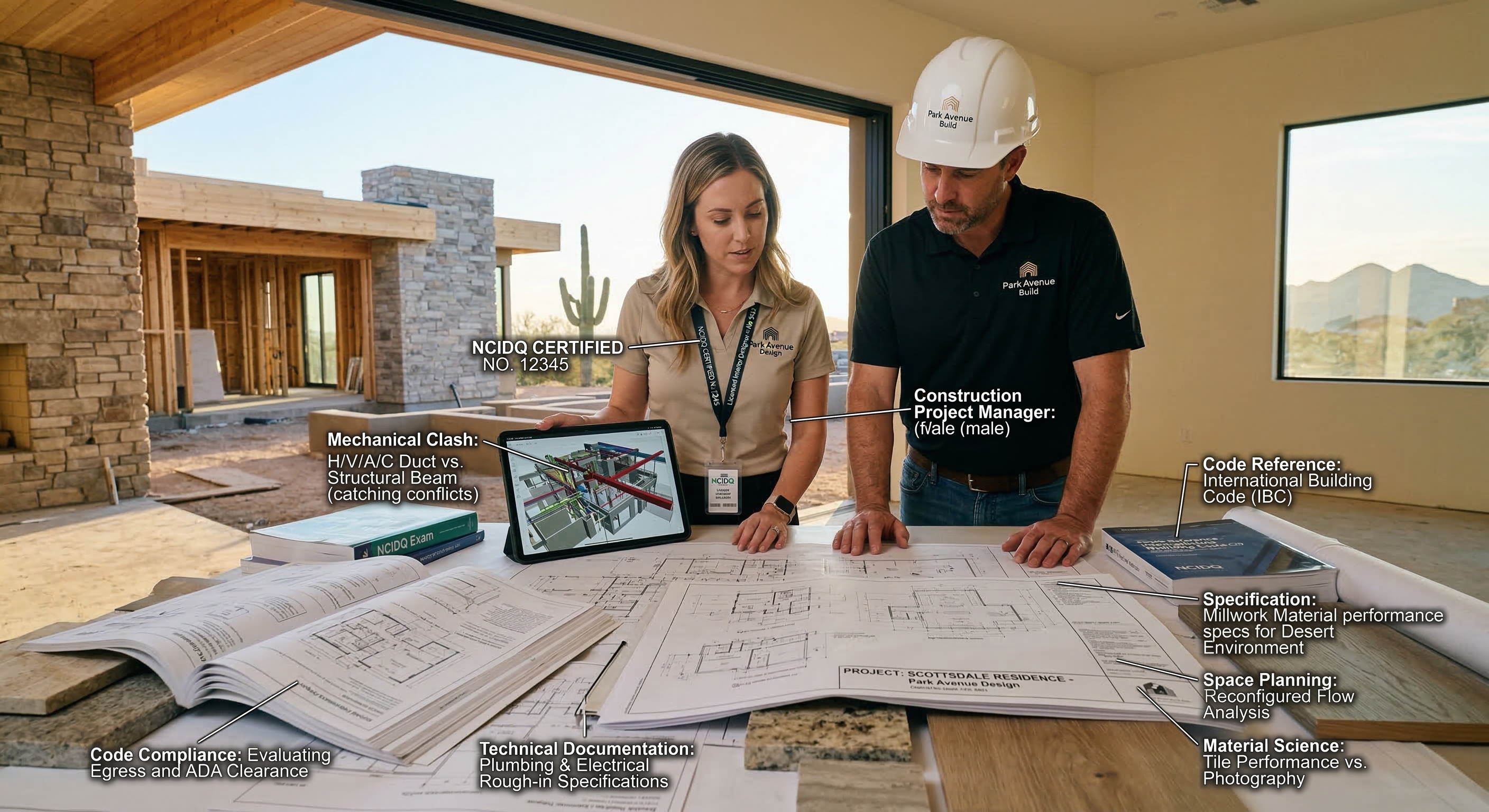
Start here. The NCIDQ credential and ASID professional membership are the primary markers of formal training and demonstrated competency in interior design. A designer who has both has an accredited degree, documented work experience, passed a rigorous multi-part examination, and committed to continuing education.
A designer without these credentials isn't necessarily untalented, but they're unverified. You're relying entirely on portfolio and word of mouth with no third-party competency signal. For purely decorating work, that may be fine. For projects involving space planning, construction coordination, or technical specification, the credentials matter.
For more on why these credentials carry real meaning, read: Why NCIDQ Certification Matters When Hiring an Interior Designer.
2. Have You Done Projects Similar to Mine in Scale and Scope?
Experience is specific. A designer who specializes in small apartment refreshes may not be equipped for a full custom home build. A designer whose portfolio is all contemporary minimalism may struggle with a client who wants rich, layered traditional glam. Ask for examples, then look at them critically.
What you're looking for: Does their work reflect range, or are all their projects essentially the same design with different clients? A designer worth hiring can work in multiple aesthetics and at multiple scales. Their portfolio should demonstrate adaptability, not just a house signature style imposed on every client.
3. How Do You Structure Your Fees, and What Does That Include?
Fee structure varies significantly between designers, and the differences are substantive, not just financial. An hourly model, a flat fee, and a percentage-of-project model each distribute risk and incentives differently. Understand which model a designer uses, why they use it, and exactly what services are included.
Ask specifically: What triggers an additional charge? What happens if the project scope expands? What if a decision takes multiple rounds of revision? Are site visits included or billed separately? Are contractor communications included? Get specific answers, in writing.
4. Will You Show Me a Sample Client Agreement Before I Decide?
A professional interior designer has a written service agreement, and should be willing to share it before you commit. The agreement tells you as much about how a designer operates as any conversation does.
Look for: Clear scope definition, fee structure, billing schedule, change order process, what happens if either party terminates the agreement, and how disputes are handled. If a designer resists sharing their agreement or doesn't have one, take that seriously.
5. How Do You Handle Budget, and What Happens When Costs Come in Higher Than Expected?
This question separates designers who are honest about money from those who avoid the subject until the bill arrives. There is no right answer to "what do you do when costs run over" but there are wrong ones. "That hasn't happened to me" is a wrong one.
What you want to hear: A clear process for budget tracking, a proactive approach to flagging potential overruns before they become surprises, and a stated philosophy around honesty with clients about money. A designer who has been practicing for any length of time has navigated budget conversations. How they describe those conversations tells you what kind of partner they'll be.
6. Who Is My Day-to-Day Contact, You, or Someone on Your Team?
Larger design firms may staff projects primarily through junior designers or project managers, with the principal involved only at key milestones. That's not inherently bad, but if you're hiring based on the principal's portfolio and sensibility, you should know upfront how much of your project they'll personally be handling.
At Park Avenue Design, Inc. I'm involved throughout. Clients aren't handed off. But not all firms work this way, and knowing upfront avoids the disappointment of finding out mid-project that the designer you hired isn't the designer you're working with.
7. How Do You Manage the Contractor Relationship?
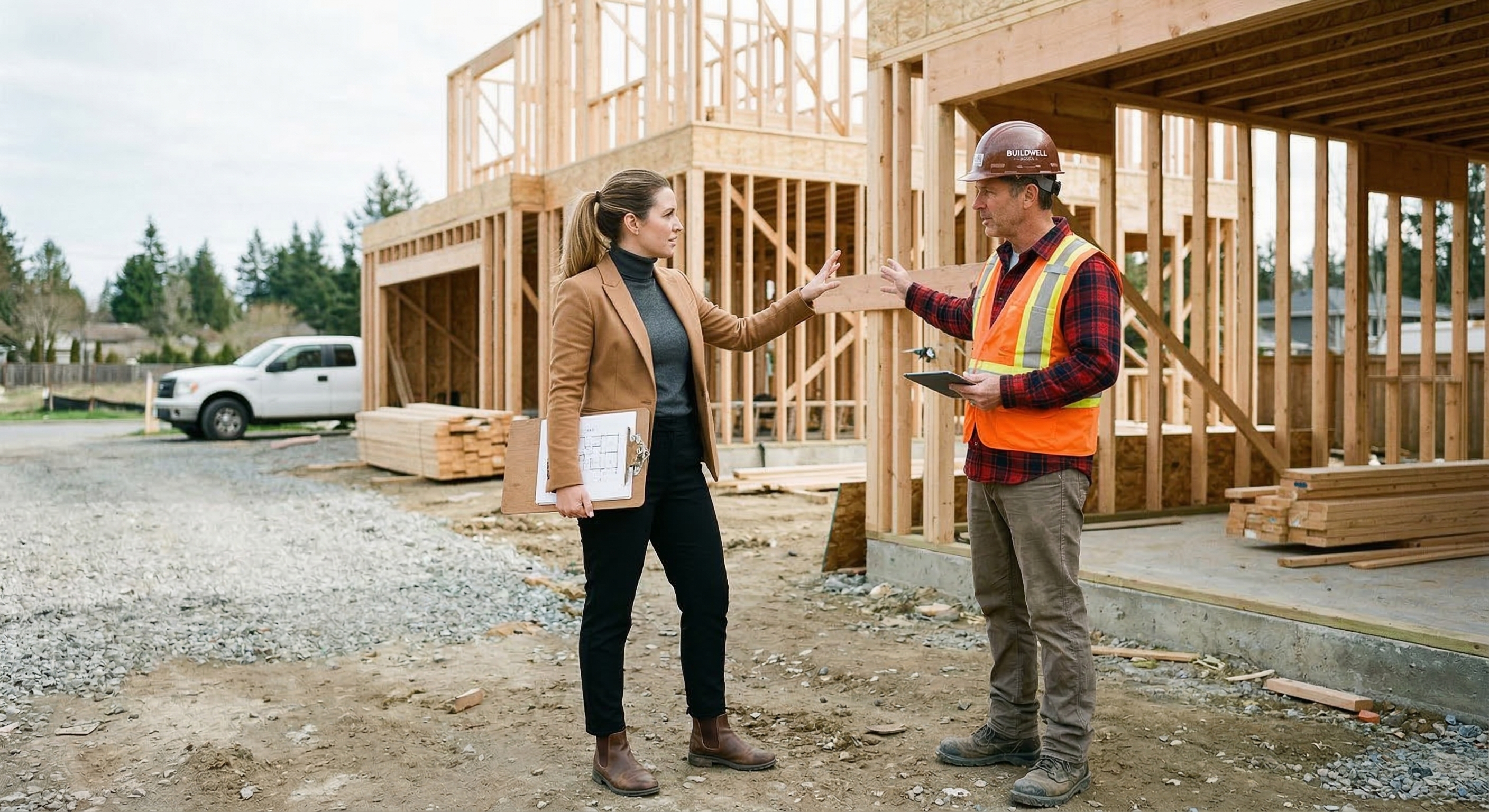
On any project involving construction, the contractor relationship is critical. Ask whether the designer has an established working relationship with contractors, or whether you'll need to source one independently. Ask how they handle conflicts between their design intent and what a contractor says is possible or cost-effective. Ask what happens when a contractor makes a substitution without approval.
A designer who can't give a clear, confident answer to these questions may be better at designing than at project managing. For renovation projects, you need both.
8. May I Speak With Two or Three Past Clients?
Reviews and testimonials are curated. Direct client references are not. Ask to speak with clients whose projects were similar in scope to yours, not the most impressive transformation the designer has ever done, but something representative of what you're planning.
When you speak with past clients, ask: Were there surprises, budget, timeline, or otherwise? How did the designer communicate when things went wrong? Would you hire them again? That last question is the most diagnostic. Clients who had genuinely positive experiences almost always say yes quickly and without qualification.
9. How Do You Handle It When I Don't Like Something You've Proposed?
A good designer has a point of view, and should be able to explain their reasoning. But a good designer also knows when to listen, when to pivot, and when the client's instinct is right even if it contradicts the design logic.
What you want to hear: Confidence in their work paired with genuine respect for your preferences. "We'd revisit it, your home needs to feel right to you, not just look good in photos." What you don't want: Defensiveness, subtle pressure to trust the professional, or a process that doesn't have clear revision rounds built in.
10. What Do You Need From Me to Do Your Best Work?
This one goes the other direction, but it tells you a lot. A designer who can answer this question clearly has thought seriously about what makes client relationships work. They might say: Prompt feedback, honest reactions to what you see, trust in the process during phases where things look worse before they look better. They might say: Clear communication about any changes in budget or timeline on your end, and availability for key decisions during design development.
The answer also shows you how the designer thinks about the collaboration. Interior design is not a service you purchase and receive passively. It works best when both parties are engaged. A designer who articulates what they need from you is already treating you like a partner.
One Final Note on the Interview Process
You're evaluating competency, yes. But you're also evaluating fit. You'll be spending months, possibly more than a year, working closely with this person. They'll be in your home, handling your money, making decisions that affect your daily life. The technical credentials matter. The portfolio matters. The references matter. But so does whether you trust them, feel heard by them, and believe they're genuinely interested in your project and not just the next one in the queue.
Pay attention to how the designer makes you feel during the interview. Competent professionals who respect you communicate that through their attention and their honesty, not through performance.
Ready to Interview Us?
Park Avenue Design welcomes the hard questions. Gabrielle Roeckelein, ASID, NCIDQ has been designing homes and commercial spaces in Scottsdale and the surrounding communities for over 25 years. We offer a complimentary initial consultation, bring your questions. Call (480) 961-7779 or visit parkavenuedesign.com/contact-us.
Gabrielle Roeckelein, ASID, NCIDQ — Park Avenue Design, Inc. | Scottsdale, Arizona