The Meeting That Determines Everything
First consultations make most homeowners a little nervous. They worry about saying the wrong thing, not knowing the "right" answers, or having tastes that are too basic or too unusual. They wonder if their house is too small, too dated, or too far along in renovation to work with.
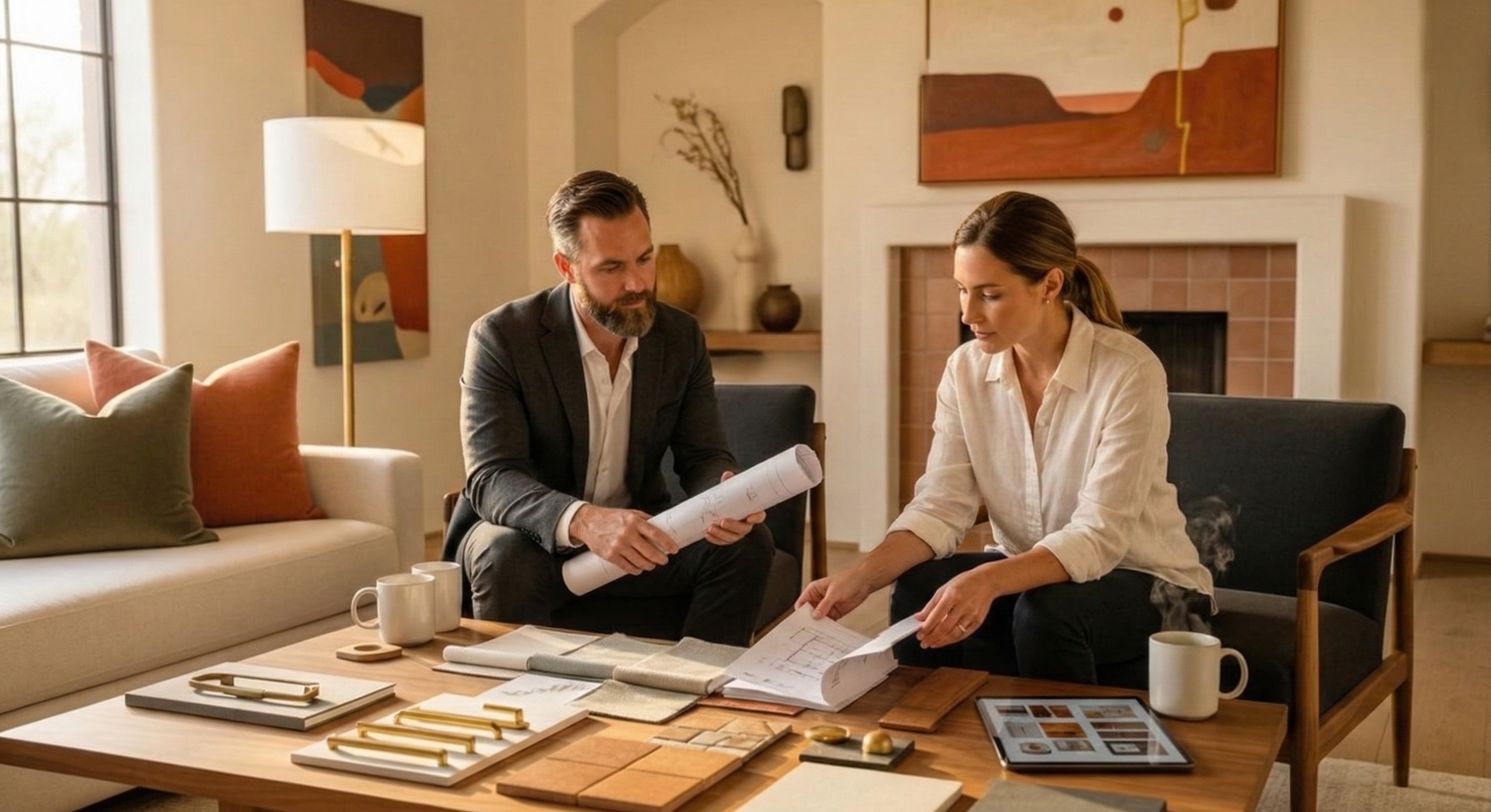
Here's the truth: The first consultation isn't an audition for you. It's an audition for us. You're evaluating whether this designer understands you, listens well, and can deliver what you need. We're assessing whether we can genuinely serve your project. It should feel like a thoughtful conversation between two professionals — not an interview with unequal power.
What follows is an honest account of what a first interior design consultation in Scottsdale looks like at Park Avenue Design — what we cover, what we ask, and what you should come prepared to share.
Before You Arrive: What to Gather
You don't need a presentation. You don't need to have your ideas perfectly formed. But a few things will make the conversation more productive.
Images That Speak to You
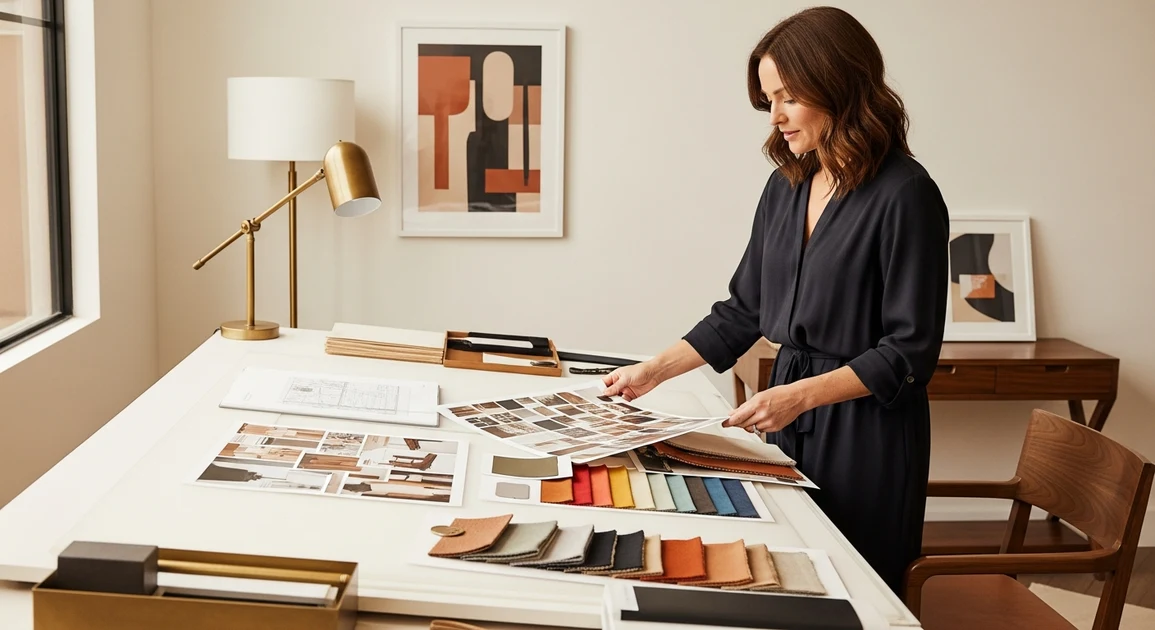
Pull 5-10 images from Pinterest, Houzz, magazines, or Instagram that you're drawn to — even if you can't explain why. Images don't lie the way words do. A client can tell me they want "modern" and show me images that are actually transitional or organic. The images tell us more than the label does. Don't curate too carefully. Include things that feel contradictory if that's honestly where your interest lands.
Images That Feel Wrong
Equally useful: A handful of images that make you recoil slightly. Strong dislikes are as diagnostic as strong preferences. If you can't stand chrome hardware, or if highly decorated rooms make you anxious, I need to know that as clearly as I need to know what you love.
A Rough Sense of Your Budget Range
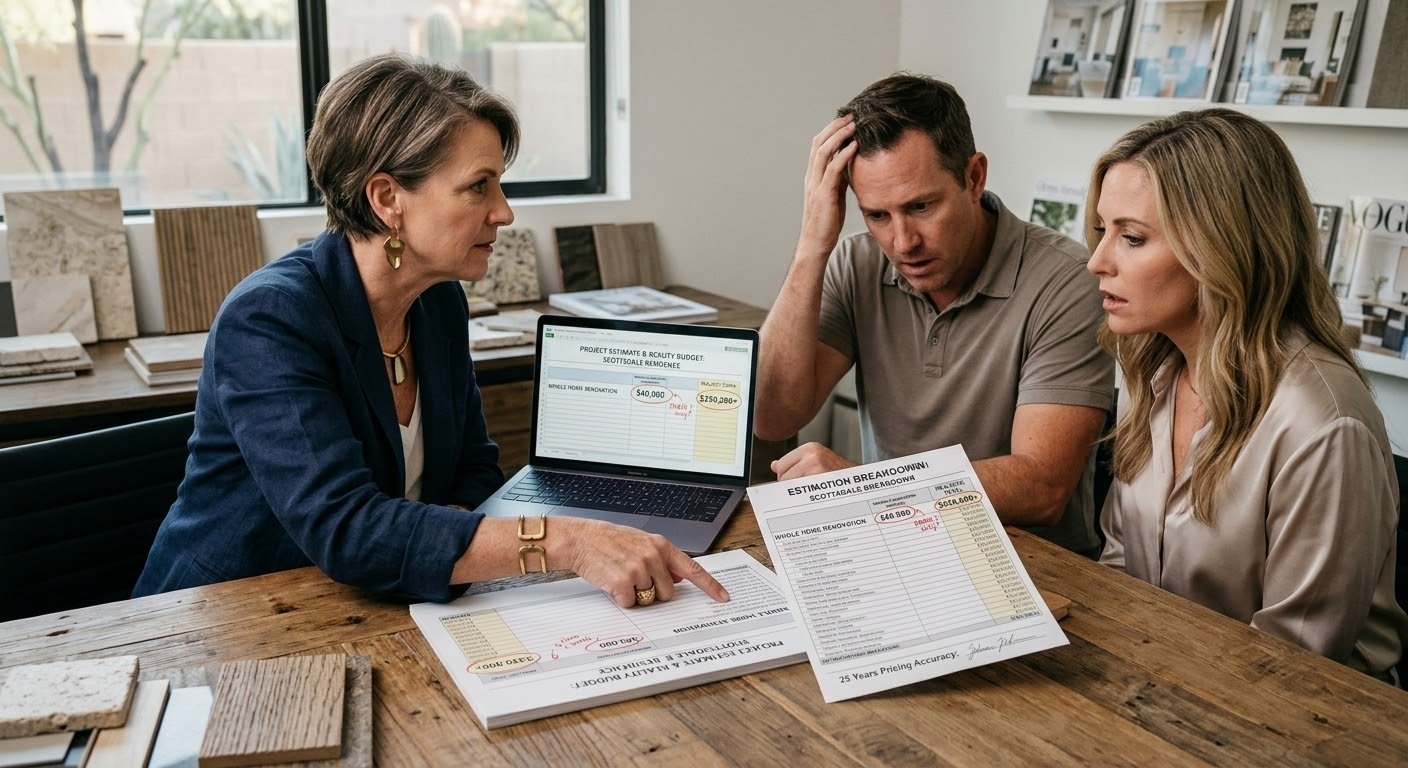
You don't need a precise number. But "somewhere between $30,000 and $50,000 for the main living areas" or "we've set aside about $200,000 for the renovation total" gives us a real starting point. Vague budget conversations produce vague proposals. Honest budget conversations produce honest, useful advice. If your budget is limited, I'll tell you what it can accomplish. I'd rather have that conversation now than after you're emotionally invested in a concept we can't execute.
A List of What's Driving You to Call Now
What finally pushed you to pick up the phone? A life change, a renovation trigger, frustration with a space that's never worked? The "why now" is often as revealing as the "what do you want." It tells us what's most urgent and what pressure you're under.
What We Cover in the First Meeting
Our first consultations typically run 60 to 90 minutes.
Your Life in the Space
Before we talk about design, we talk about how you live. Who uses the home, how frequently, and in what ways? Do you entertain often or mostly live privately? Are there children, pets, or aging family members whose needs the design should accommodate? Do you work from home? Travel extensively and want a home that's effortless to maintain in your absence?
I ask specific, sometimes granular questions. "Where do you put your keys when you come in the front door?" "Does the whole family eat at the dining table, or is that room decorative?" "Does morning light wake you up and is that good or bad?" These details shape functional design decisions that aesthetics alone can't answer.
What's Working and What Isn't
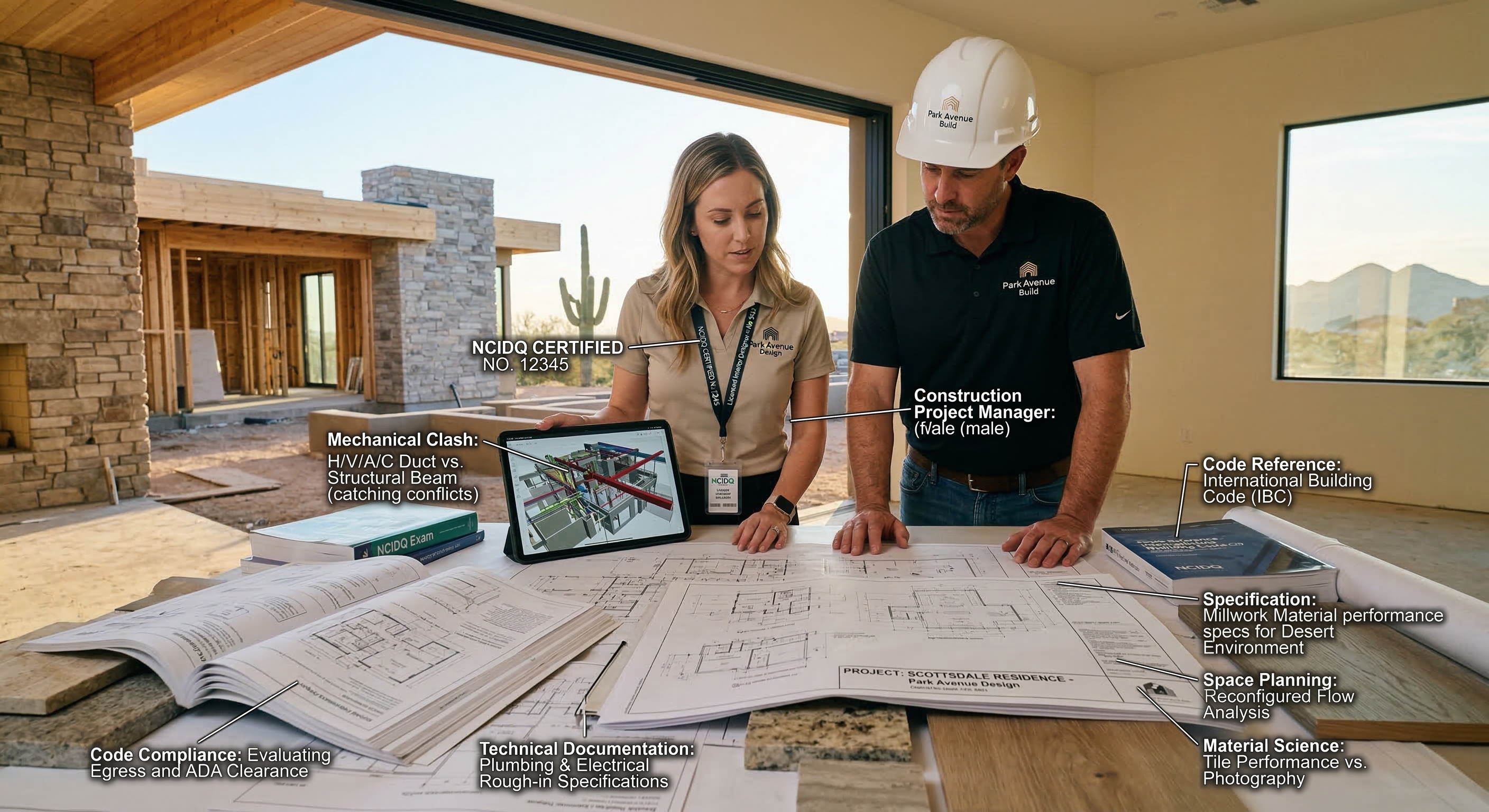
I want to understand the current space: what's failing the space and what, if anything, to keep. We walk the space together. I'm looking at proportions, natural light, traffic patterns, the relationship between rooms, and the architectural bones that either support or work against the design direction you want.
I'm also listening for frustration. The traffic pattern that drives you crazy every morning. The living room that everyone avoids because it's awkward. The kitchen that doesn't flow for how you actually cook. These friction points are often the most valuable information in the whole meeting.
Your Aesthetic Direction
We look at your images together and talk about what's attracting you to them. Sometimes it's color. Sometimes it's texture or materiality; there's a preference for natural materials over synthetic, or warmth over cool tones. Sometimes it's a feeling a space creates: expansive versus intimate, calm versus energetic, sophisticated versus relaxed.
I ask whether you want the design to reflect a specific regional aesthetic, say in Arizona, that might mean working with or against the Southwestern tradition; or whether you're looking for something that has nothing to do with the desert context.
Scope and Timeline
We clarify what rooms or areas are in scope, what the sequencing constraints are (do you need to live in the house throughout the renovation, or is it vacant?), and whether there's a hard deadline driving the timeline, maybe a family event, a lease expiration, a planned relocation.
I'm direct about timeline reality. A full-home renovation in Scottsdale, done well, is rarely less than 9-12 months from design kickoff to final installation. Custom furniture runs 8-16 weeks. Cabinetry can run 6-8 weeks. If a client needs a finished house in four months, I need to know that immediately — because it affects what we specify and how aggressively we manage the schedule.
Fees and Process
We walk through how we structure our services, what the fee model looks like for a project of this scope, and what the process looks like phase by phase. No ambiguity, no pressure.
Questions We Expect You to Ask
A good first consultation is a two-way conversation. We expect, and welcome the hard questions. The ones I hear most often:
- "Have you done projects like mine before?" Fair. We'll show you.
- "How do you handle budget overruns?" Honestly and proactively. I'll tell you about potential cost exposure before it materializes, not after.
- "What happens if I don't like a direction you propose?" We revisit it. The concept phase exists for exactly this reason.
- "Can you work with contractors I've already hired?" Usually yes, though we'll need to evaluate compatibility and communication style.
- "Do I have to buy everything through you?" Depends on the fee structure we agree on. We'll discuss this explicitly.
What We're Evaluating About You — Honestly
I mentioned that the first meeting is also an evaluation of the client relationship. Here's what that means in practice:
We're looking for whether you can make decisions, or whether every decision will require weeks of committee deliberation. We're listening for whether you have a strong point of view or are entirely open, because both extremes require different approaches. We're assessing whether your budget and your expectations are aligned. And we're reading for the kind of trust that makes a design relationship work. We want the willingness to hear honest feedback, to try something outside your comfort zone, to trust a professional who has done this many more times than you have.
We also listen for red flags, not to be harsh, but because a project that isn't a good fit for our firm doesn't serve you or us. If I can see in the first meeting that a client needs a fundamentally different kind of design service, I'll say so, and often refer them to someone who's a better match.
Pro Tip: Come With Your Real Opinions
The worst thing you can do in a first consultation is tell us what you think we want to hear. "We're flexible, we'll go with whatever you suggest" sounds polite, but it gives a designer almost nothing to work with. Your home should reflect you, not our preferences imposed on your space. The more honestly you show up in this first meeting, the better the design will be. I always say, “I don't live here, you do and it should reflect you.”
Equally: If you hate something we show you, say so immediately. Designers are not fragile. We would far rather know in week two that a direction isn't landing than in week twelve, after significant specification work has been done.
After the Consultation: What Happens Next
Following the initial meeting, we typically provide a written proposal outlining scope of services, fee structure, and our understanding of your project objectives. This gives you something concrete to review, compare if you're speaking with multiple designers, and use as the basis for questions before signing an agreement.
There's no obligation after a first consultation. It's a conversation. The decision to move forward belongs entirely to you.
Schedule Your Complimentary Consultation
Park Avenue Design offers a complimentary first consultation for residential and commercial projects in Scottsdale, Paradise Valley, North Scottsdale, and surrounding communities. Gabrielle Roeckelein, ASID, NCIDQ brings 25+ years of experience and a reputation for listening carefully and delivering designs that genuinely reflect the people who live in them. Call (480) 961-7779 or visit parkavenuedesign.com/contact-us to schedule.
Gabrielle Roeckelein, ASID, NCIDQ — Park Avenue Design, Inc. | Scottsdale, Arizona