A Restaurant Lives or Dies in the First Twenty Seconds
Before a guest orders. Before they're seated. Before a server says hello. The space communicates something: Safety, excitement, sophistication, warmth, indifference, all in the first twenty seconds of entry. That communication is either intentional, or it happens by default, shaped by whatever decisions the owners made when they built the place out.
The restaurants that generate genuine loyalty are the ones where regulars book the same table every Friday, where out-of-town guests are brought by locals as a point of pride, where the experience becomes part of how clients describe Scottsdale to people who haven't been, are not uniformly the ones with the best food. They're the ones where the physical experience of being there is as carefully considered as the menu.
This is the hospitality design challenge: Creating an environment that consistently generates a specific feeling, across every table, at every visit, through service years and seasonal changes and the inevitable wear that every physical space accumulates. After 25 years of designing interiors, including commercial and hospitality spaces in the Phoenix metro market, I've watched enough restaurants open, struggle, and close — and enough succeed and sustain — to have strong opinions about what separates one from the other.
The Experience Hierarchy in Hospitality
Hospitality design research consistently finds that physical environment is the primary driver of first impressions, more influential than service or food in the initial emotional response. That initial emotional response determines whether a guest returns. It also determines what story they tell about the place, and restaurant survival is significantly driven by the stories guests tell.
The physical environment communicates several things simultaneously:
Category signal. A guest wants to know immediately whether they're in a casual dining environment, a fine dining context, a lively social space, or a quiet intimate setting. Mixed signals — formal lighting with casual furniture, quiet acoustic design with a loud, busy bar — create discomfort that guests feel but can't always articulate.
Warmth vs. energy. Different concepts need different emotional calibrations. A neighborhood Italian restaurant should feel warm and welcoming — the design equivalent of a hug. A rooftop bar catering to young professionals wants energy, a slightly elevated pulse rate, the feeling that something is happening here. A high-end sushi restaurant is quieter, more focused, with an aesthetic reverence for precision. Each of these emotional tones requires specific design choices, and they don't overlap.
Longevity signal. Guests at higher price points are reading a restaurant's physical quality for evidence of staying power. Cheap finishes, materials that show wear within a year, lighting that's already failing; these communicate that the owners didn't invest in the space, which casts doubt on whether they've invested in the kitchen and the product.
Acoustics: The Problem Almost Nobody Plans For
The most common design failure in Scottsdale restaurant spaces is acoustic. A room that's too loud that requires guests to raise their voices to be heard across the table that produces measurable stress responses, regardless of how beautiful the space looks or how good the food is. Studies on restaurant acoustics have found that perceived loudness affects food quality ratings: The same food rates lower when heard in a noisy environment than in a quieter one.
Modern restaurant design's predilection for hard, reflective surfaces, concrete, tile, exposed brick, glass, polished metal, is aesthetically driven and acoustically disastrous. These materials are specular sound reflectors. A room full of them, with 80 people having simultaneous conversations, generates noise levels that push into physically uncomfortable ranges (above 75–80 dB).
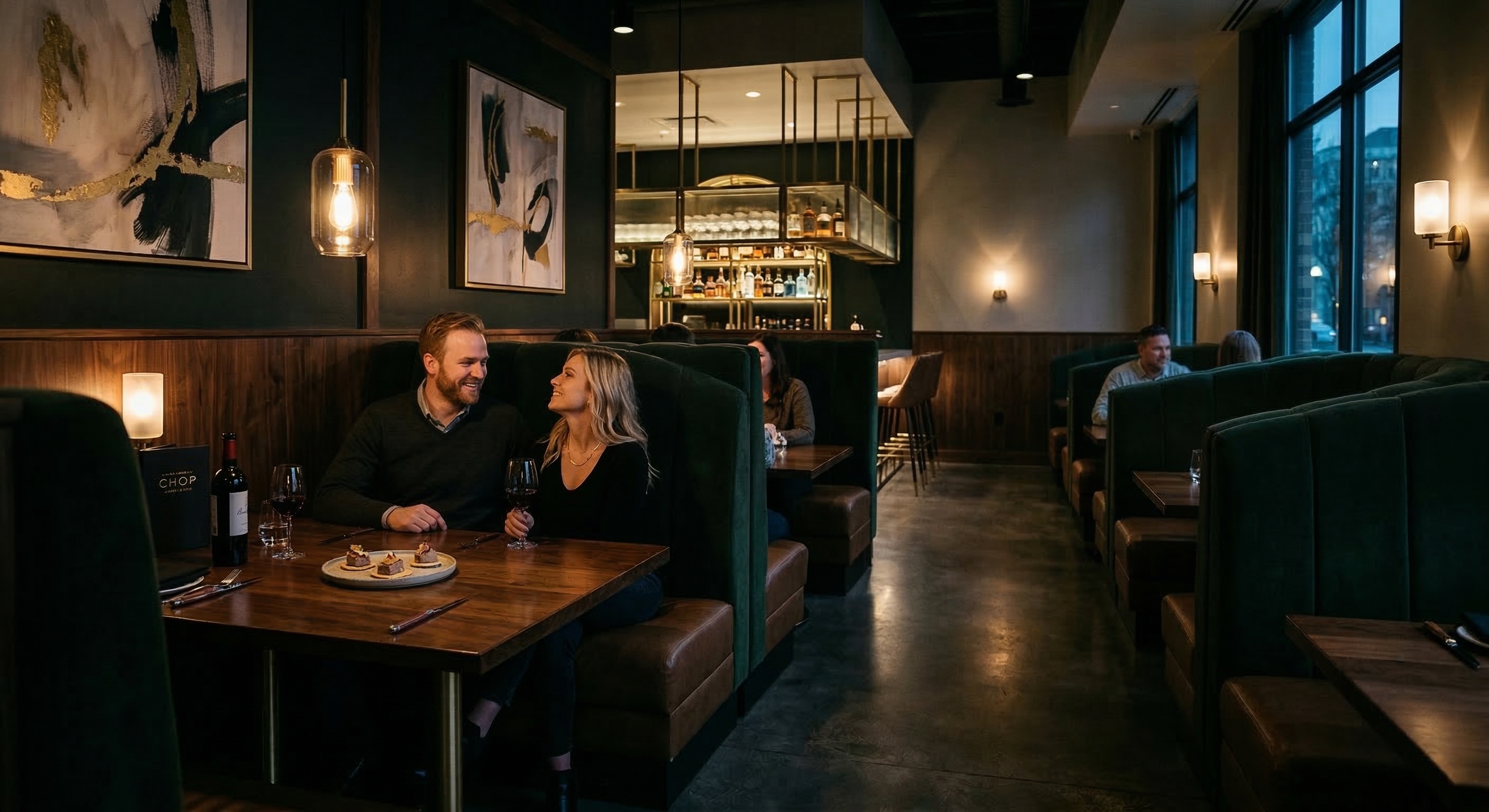
Acoustic treatment in a restaurant context doesn't require ceiling tiles and carpet — the acoustic nightmare of the 1990s family restaurant. It requires integrating sound absorption into surfaces that look designed: Upholstered banquette backs that absorb sound while providing visual texture, acoustic panels integrated into architectural niches and feature walls, ceiling clouds or baffles in materials that belong aesthetically while reducing the room's reverberation time, and carpet or area rugs where they're appropriate to the concept.
We design acoustic performance into hospitality spaces explicitly, targeting specific reverberation time goals for the concept's intended experience level rather than treating it as an afterthought. This requires either an acoustic consultant on the team or a designer with enough understanding of acoustic principles to make specifications that achieve the right result.
Lighting: The Most Powerful Atmospheric Tool
Restaurant lighting is where designers can dramatically affect the emotional experience of a space at relatively modest cost compared to architectural changes. The principles:
Guests look better and feel better under warm light (2700K–3000K). Restaurant lighting that reads warmer and dimmer, lower overall lumen levels with light concentrated on tables and faces rather than distributed evenly across the entire room, creates intimacy and flatters guests. This is not a design trick; it's a genuine quality-of-life improvement for the people eating there.
Multiple lighting layers are essential. Ambient light sets the mood. Table or pendant lights over specific zones create focus and intimacy. Accent lighting illuminates art, bar displays, wine collections, and architectural features. The bar itself needs higher light levels for the functional work happening there. All of these layers should be dimmable and independently controlled, the lighting at 6 p.m. on a Tuesday should feel different from the lighting at 9 p.m. on a Saturday.
Statement lighting fixtures have genuine design value in hospitality spaces beyond their functional role. A dramatic chandelier over the bar, a custom pendant installation above the dining room, a sculptural fixture in the entry. These become landmarks within the space that guest's reference when describing the restaurant. They also photograph well, which matters enormously in the social media era.
Seating: Comfort and Duration
Restaurant seating is a direct economic lever. Comfortable seating that guests want to stay in extends dining time, which increases beverage revenue and the likelihood of dessert orders. Uncomfortable seating creates the opposite effect. This is a documented relationship in hospitality operations research.
The specific seating question for each concept: How long does the operator want guests to stay? A quick-service lunch concept wants table turnover; seating shouldn't be so comfortable that guests linger for two hours over a $14 salad. A fine dining dinner concept wants guests to stay for two to three hours and order wine and dessert; seating should support that duration comfortably.
For most Scottsdale full-service restaurants, the seating mix that works: A combination of banquette seating along walls (which guests prefer and which creates visual rhythm through the dining room), four-top tables that can be combined, and a bar seating area with a slightly different character for solo guests and smaller parties. Booth seating, where it fits the concept and the space, provides the "refuge and prospect" spatial quality that makes guests feel settled and comfortable.
The Outdoor Component: Non-Negotiable in Arizona
A Scottsdale restaurant without well-designed outdoor seating is leaving revenue on the table approximately nine months of the year. The outdoor space needs to feel as designed as the interior, not as an afterthought patio with folding chairs, but as an extension of the restaurant's identity into the Arizona environment.
Outdoor hospitality design in Arizona has specific requirements: Shade structures that provide protection from afternoon sun without eliminating the open-air quality, misting systems that extend comfortable use through late spring and early fall, heaters for the genuine cold snaps that hit the Valley in December and January, and lighting that creates an atmosphere worthy of the restaurant's positioning after dark.
The most effective outdoor hospitality spaces in Scottsdale feel like a destination within the destination — a space that guests request specifically rather than accept as an alternative to interior seating.
Material Durability vs. Design Ambition
The materials in a restaurant take abuse that residential interiors never see. Upholstery is subjected to daily cleaning with commercial products, repeated contact with food and beverage, and hundreds of thousands of seating cycles over a five-year period. Flooring handles stiletto heels, dropped glassware, and constant commercial mopping. Walls receive grease vapor and humidity in kitchen-adjacent zones, and daily contact damage near seating areas.
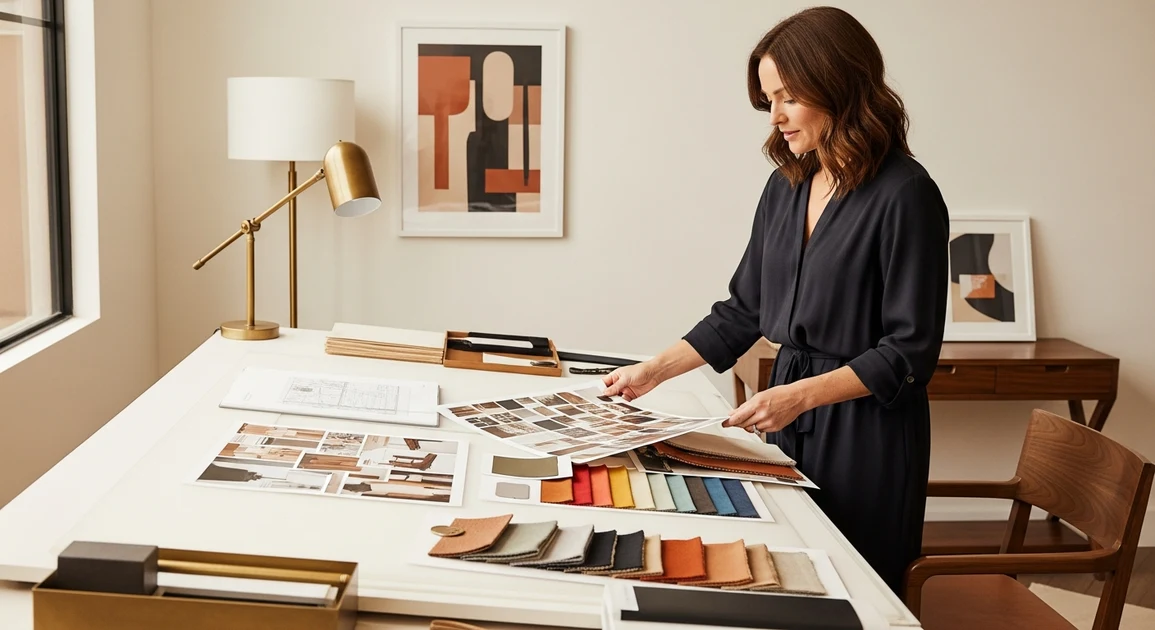
High-performance commercial materials have improved dramatically in the past decade, and the best of them now achieve the visual quality of residential-grade materials with the durability of commercial specification. Performance fabrics in contract grades: Crypton, Sunbrella for indoor use, Revolution do resist staining and abrasion while achieving the texture and appearance of fine upholstery. Porcelain tile in large format reads as stone and performs as tile. Vinyl flooring in luxury vinyl plank format achieves the look of hardwood at commercial-grade durability.
The material conversation in hospitality design always balances design ambition against operational reality. A material that photographs beautifully but shows wear within 18 months is a design failure in a commercial context, even if it would be appropriate in a residential one.
Brand Coherence and the Firebrand Connection
The best hospitality environments function as physical expressions of the brand. Every design decision, the typeface on the menu, the color of the walls, the style of the fixtures, the music, the staff uniform either reinforces the brand identity or creates friction with it.
For clients who are building a hospitality concept from the ground up, or who are repositioning an existing one, the design work and the brand work need to happen together. This is where our relationship with Firebrand Agency, our sister company, specialists in brand identity, digital presence, and marketing for hospitality and commercial clients that adds genuine value. When Park Avenue Design, Inc is handling the interior environment and Firebrand is developing the brand identity, website, and marketing materials simultaneously, the result is a concept where every touchpoint is coherent rather than designed separately and forced to coexist.
A restaurant where the physical environment, the digital presence, the signage, and the brand voice all tell the same story is measurably more successful at building the kind of loyalty that drives long-term revenue. We've seen this play out in joint projects, and it's one of the most tangible arguments for coordinated brand-and-design work in hospitality.
What a Hospitality Design Engagement Looks Like
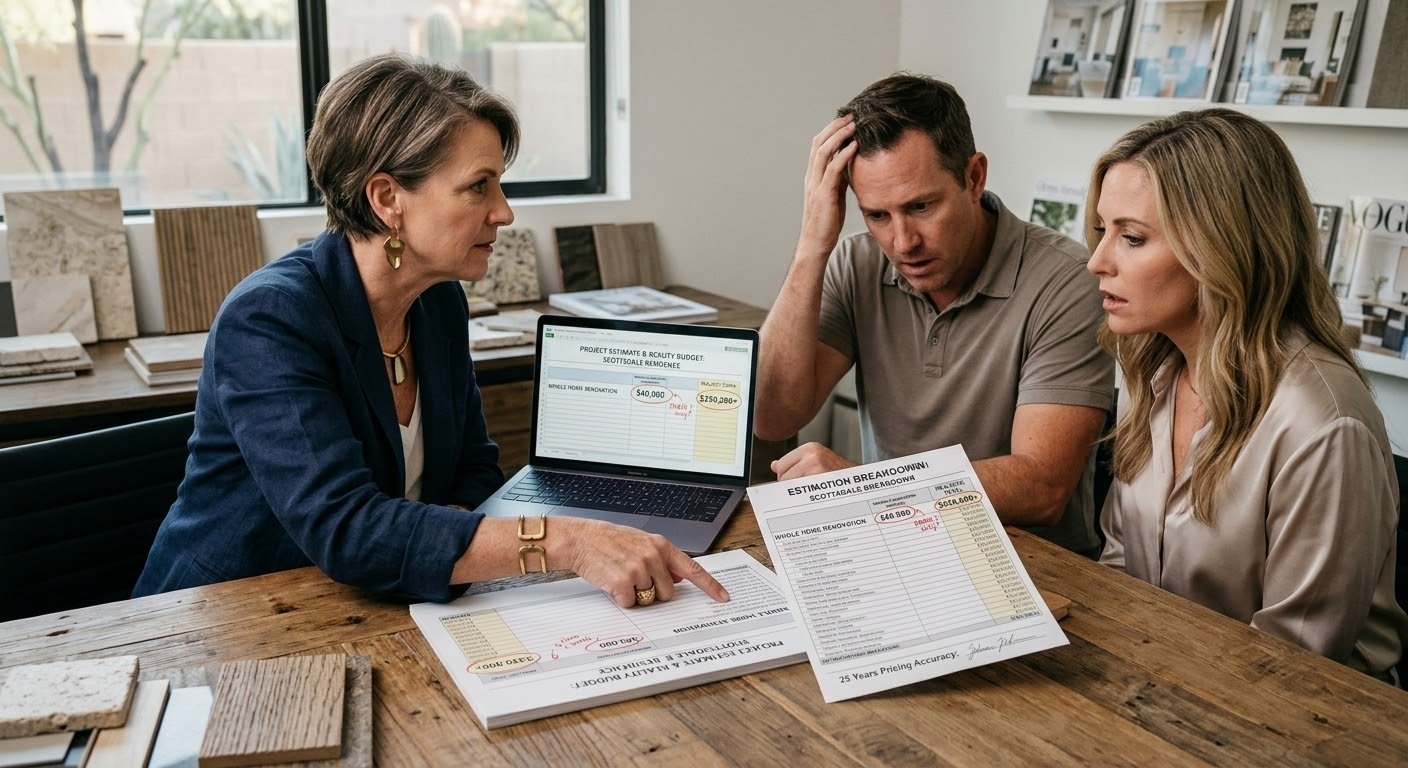
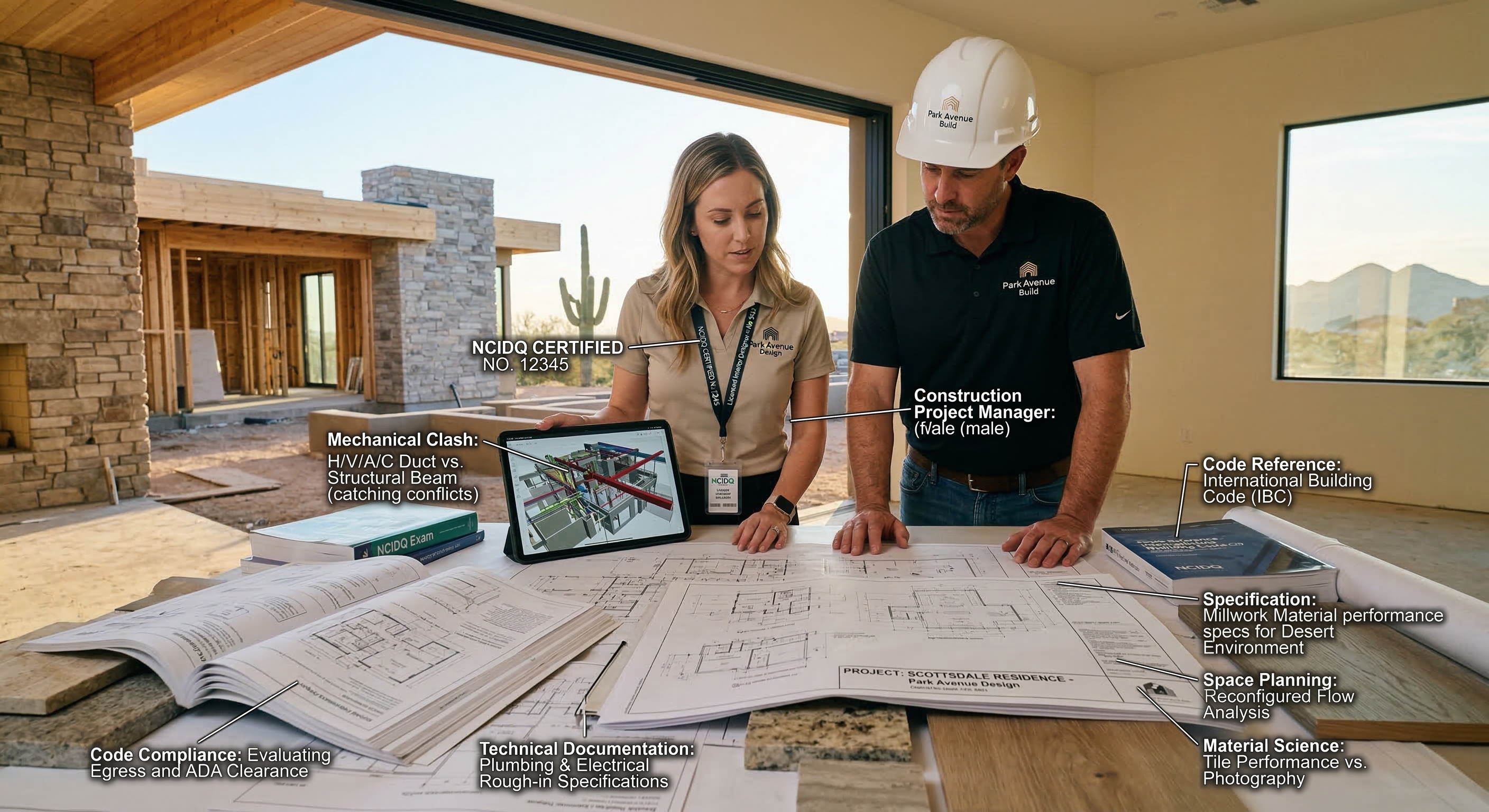
Commercial hospitality design engagements are structured differently from residential projects. The timeline is often compressed by lease obligations or investor expectations. The scope includes coordination with commercial contractors, health department requirements, fire and life safety systems, and ADA compliance — all of which require specific expertise. And the budget conversation is calibrated to construction-per-square-foot and revenue-per-square-foot rather than residential project cost ranges.
For a full-service restaurant build-out in the Scottsdale market, expect all-in construction costs (excluding kitchen equipment) of $250–$450 per square foot for a quality build. Full-service restaurant kitchen equipment packages run $150,000–$400,000 depending on concept. Design fees for commercial hospitality are typically structured as a percentage of construction or as a flat project fee — we provide detailed fee proposals based on scope.
If you're developing a restaurant, hotel, boutique hospitality concept, or similar commercial project in Scottsdale or the Phoenix metro area and want to understand what a design engagement looks like, call Park Avenue Design, Inc at (480) 961-7779 or visit parkavenuedesign.com/contact-us. Gabrielle Roeckelein, ASID, NCIDQ has worked on commercial and hospitality projects throughout her 25-year career and brings the same standards of quality and material specification to commercial work that distinguishes our residential portfolio.
Learn more about our commercial interior design services, or read about medical office design for another perspective on commercial environments that balance function and experience.
Gabrielle Roeckelein, ASID, NCIDQ — Park Avenue Design, Inc. | Scottsdale, Arizona