The Math That Surprises Most Homeowners
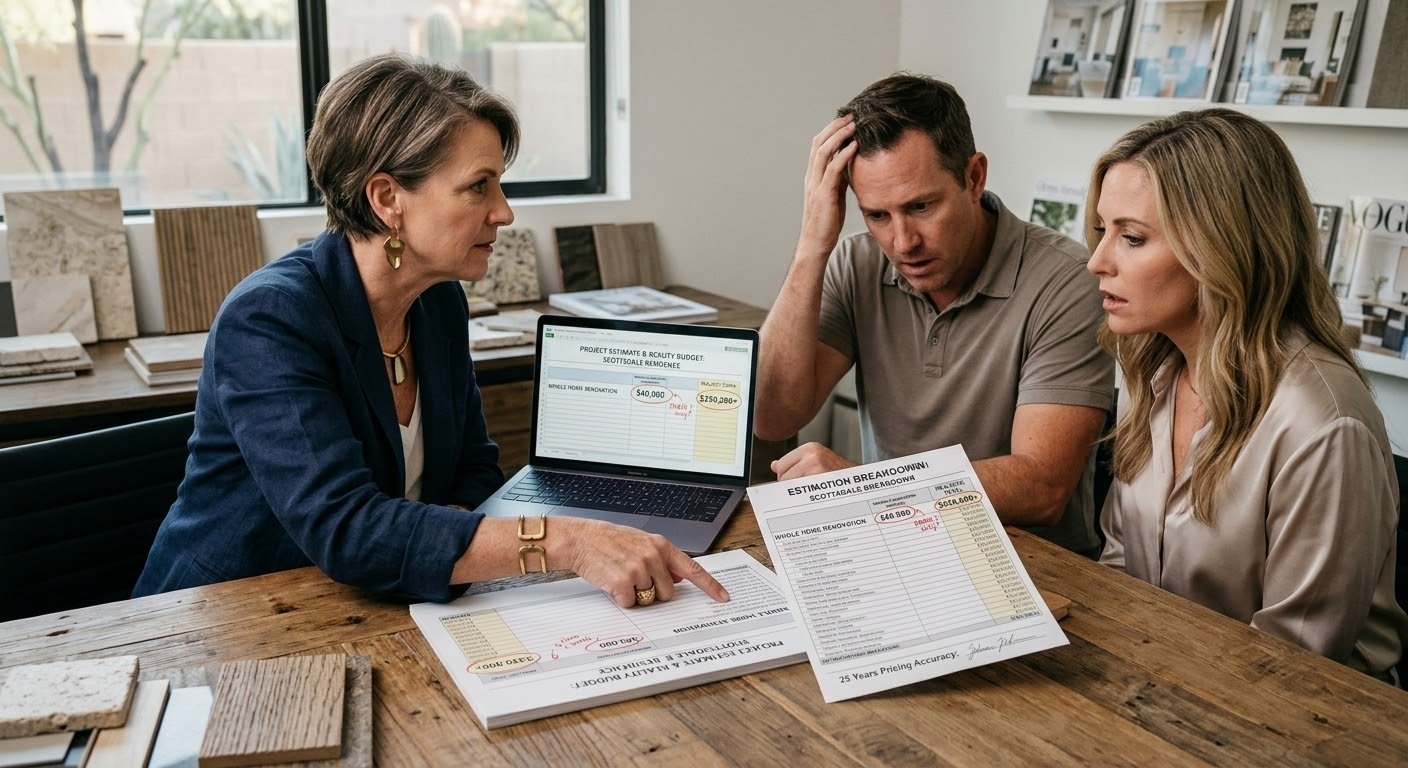
The moment a homeowner sees an interior designer's fee, the mental calculation begins: "Is this worth it? Could I just do this myself?" It's a fair question. Design services represent real money, and the value proposition isn't always obvious before the process starts.
Here's what I've seen consistently over 25 years: Clients who work with a professional designer on significant projects typically spend less on the total project, furniture, materials, renovation costs, mistakes, and everything else combined, than they would have spent attempting the same project without one. The fee is real. The savings are also real. And they tend to run in one direction: The fee costs less than the errors it prevents.
Let me show you the specific mechanisms.
Trade Pricing: The Most Direct Savings
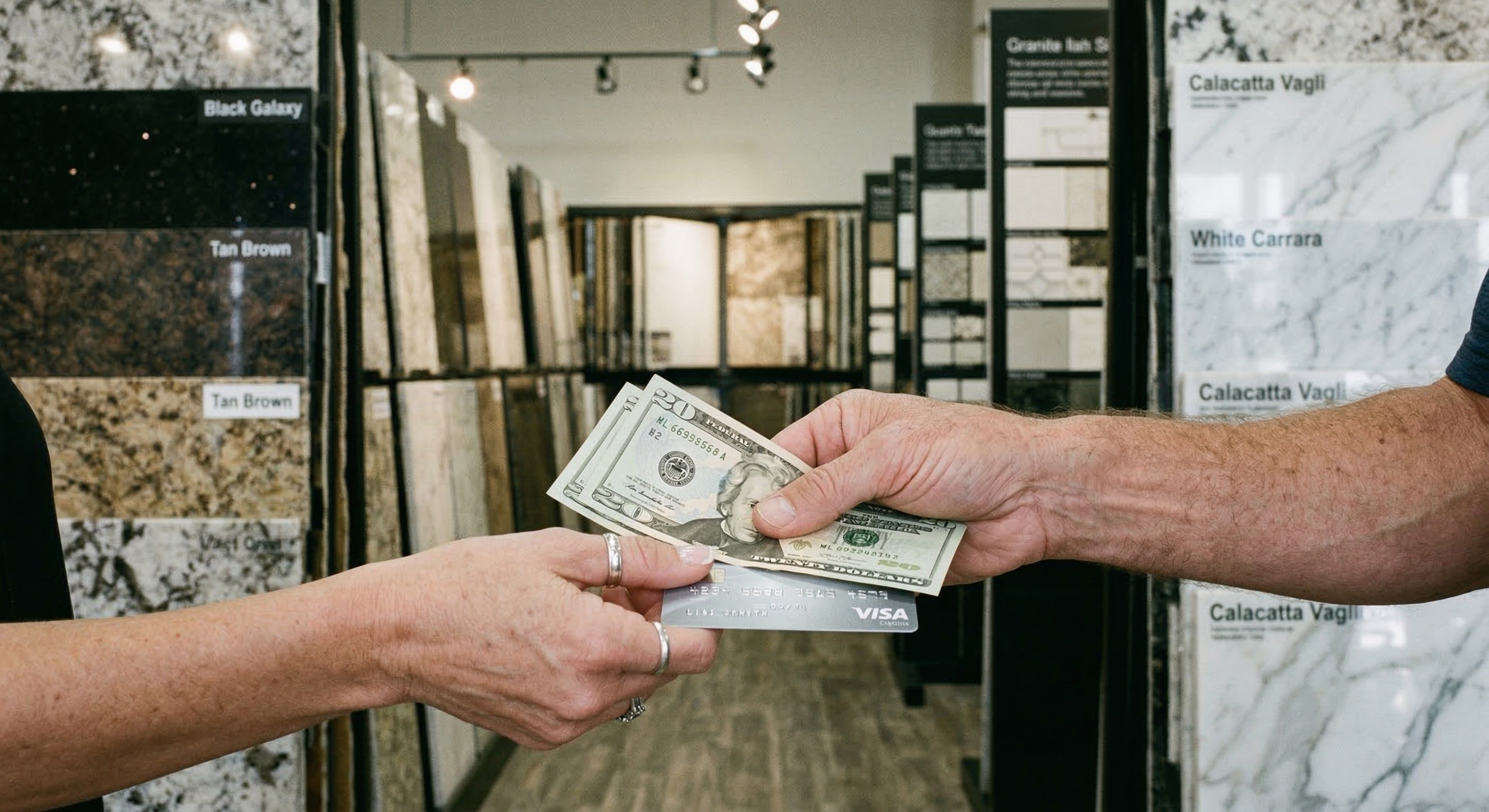
Designers access trade pricing on furniture, fixtures, textiles, lighting, and accessories, pricing that is not available to the general public regardless of how much they spend. These discounts reflect the designer's purchasing volume and the ongoing vendor relationship built over years of consistent business.
At Park Avenue Design, Inc. I've built those vendor relationships over 25 years. The trade pricing and volume discounts available to us are significant. I won't quote specific percentages because the variation by vendor and product category is wide, but on a substantial furnishings package, the savings frequently offset a meaningful portion of the design fee.
Here's the practical math: On a $150,000 furnishings package across a whole-home project, trade pricing savings compared to retail can run tens of thousands of dollars. If the design fee for that same project is, say, $25,000 to $40,000, which is a reasonable range for a project of that scope, the trade pricing advantage alone may partially or fully offset the fee. You end up paying for expertise and full project management and getting it essentially free.
The caveat: This calculation is most compelling on large furnishings projects. On a small project with minimal purchasing, the trade pricing savings are proportionally smaller and may not offset the fee. This is one reason smaller projects may be better structured as consulting engagements rather than full-service design.
The Cost of Mistakes You Don't Make
This is harder to quantify but arguably more significant. Design mistakes at every scale cost money, sometimes a little, sometimes catastrophically.
Wrong-Sized Furniture
A sofa that doesn't fit through the front door. A dining table that seats six in the showroom but swallows the room at home. A coffee table scaled for a room twice the size of yours. These are not rare. They happen constantly when people buy without professional guidance. The cost: Restocking fees, delivery charges, replacement purchases. On a single significant upholstered piece, the error can run $2,000 to $8,000.
Wrong-Material Specification
A tile selected from a small sample that looks dramatically different installed across 400 square feet. A countertop material that etches and stains in kitchen conditions. An outdoor fabric that fades in six months under Arizona sun. Flooring that expands and contracts with seasonal humidity changes in ways that cause gapping or buckling.
Material specification errors in renovation projects are expensive to correct. Reinstalling tile after a bad selection, demo, removal, new material, new labor can cost $8,000 to $20,000 or more for a significant space. A designer who knows material performance in your specific environment prevents these errors before they happen.
Layout Errors in Renovation
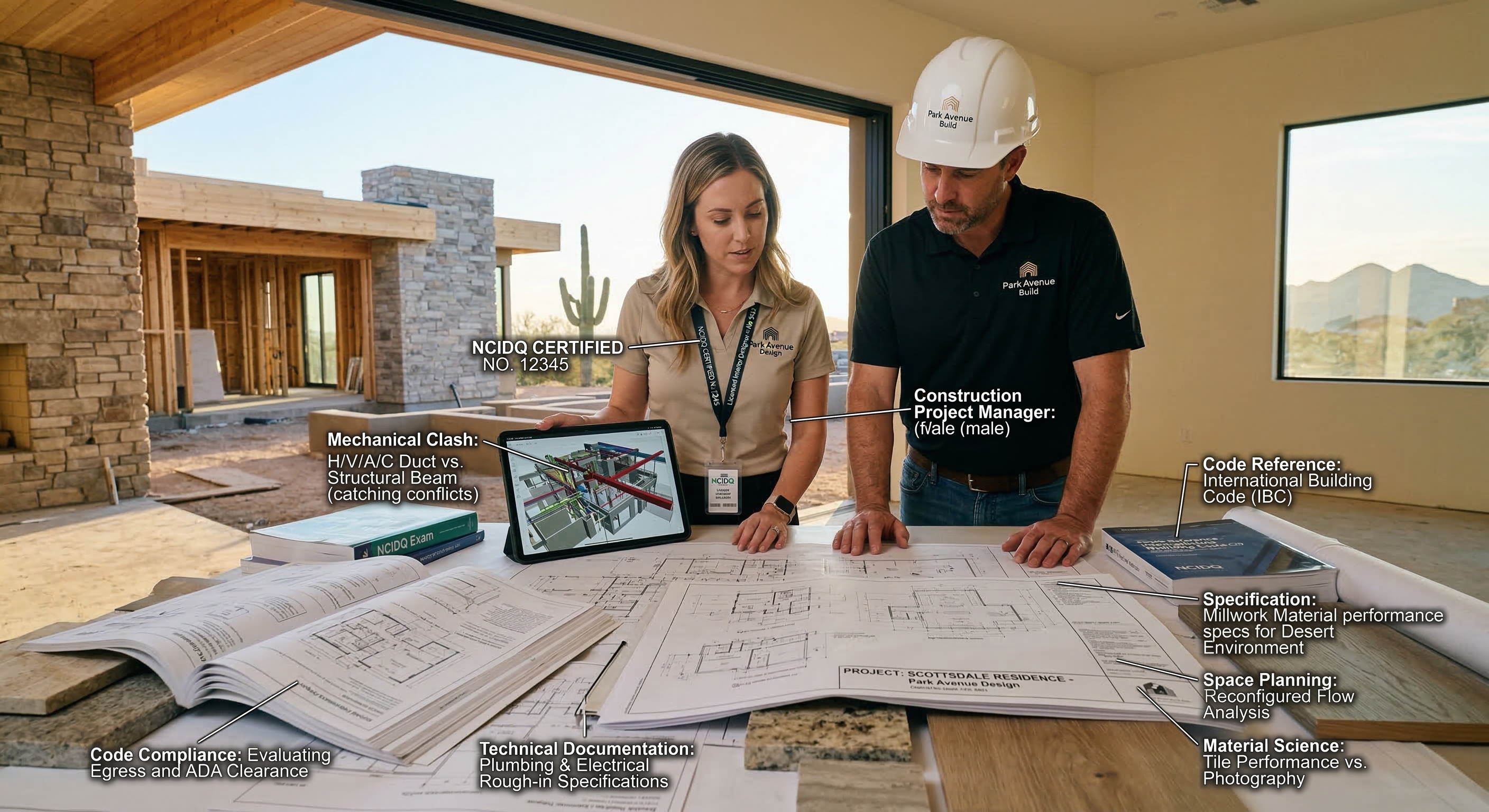
Moving a wall and putting it back because the new configuration didn't work. Relocating plumbing only to discover the new placement created a worse layout. Specifying a built-in that conflicts with a door swing that everyone missed on the drawings. Each of these "do-over" moments in a renovation runs $5,000 to $30,000 depending on the scope.
A designer who has done hundreds of projects has seen these failure modes. They don't prevent every error, no one does, but they dramatically reduce their frequency.
Contractor Coordination: Protecting the Bid You Got
Getting a good contractor bid matters. But what happens after the bid is signed matters just as much. Contractors build what they're given. If the documents are ambiguous, the contractor fills in the gaps, often in the way that's easiest or cheapest for them, not necessarily what you envisioned. Change orders follow, and change orders are expensive.
A designer who produces clear, complete documents, and who reviews contractor submittals and shop drawings before work begins, reduces the frequency of change orders significantly. Each change order avoided is direct savings. On a substantial renovation, the difference between a project managed with complete design documents and one managed with vague direction can be tens of thousands of dollars in change order costs.
The Value of Buying Once
There's a concept in design that I think of as "buying twice", where a client makes a furniture decision, lives with it for two years, and eventually replaces it with what they should have bought the first time. The total cost of that sofa is now twice what the right sofa would have cost.
When design is done well, when the proportions are right, the material is right, and the piece genuinely fits the space it was chosen for, clients don't replace it. They live with it, love it, and refer their friends to us. When design is done impulsively or reactively, the cycle of partial satisfaction and eventual replacement runs indefinitely.
Buying quality, appropriate pieces once, at trade pricing, is a better financial outcome than buying lesser pieces multiple times at retail.
Project Management: What Your Time Is Worth
A full renovation involves hundreds of decisions, dozens of vendor contacts, complex scheduling logistics, and extensive contractor coordination. If you're managing that yourself, while also working, raising children, and maintaining a normal life, the time cost is enormous. Most people significantly underestimate it until they're in the middle of it.
Design project management is a real service with real time value. For a client whose professional time is worth $200 to $500 per hour, which describes many of our clients in Scottsdale and Paradise Valley, the time savings of having a project managed professionally represents significant value that never appears on a spreadsheet comparison of designer fees.
The Tariff Factor in 2026
The current tariff environment on imported goods is a concrete example of how professional sourcing knowledge saves money. Import costs on furniture, tile, fixtures, and decorative accessories are meaningfully higher than they were 18 months ago. A homeowner sourcing independently may not know which categories are most affected, which domestic alternatives are available, or how to pivot without sacrificing quality.
My deep relationships with American manufacturers, developed over 25 years of purchasing relationships — mean we can redirect sourcing to domestic suppliers when import costs make certain items impractical. That pivot happens seamlessly, and clients get comparable quality without paying the tariff premium. That knowledge has real dollar value right now.
What Design Can't Save You From
I want to be honest about the limits here. A designer doesn't guarantee against all cost surprises. Contractor pricing is determined by market conditions, not by us. Discoveries during demolition, the unforeseen plumbing problem, the structural element behind the wall, happen regardless of how good the design is. Material prices fluctuate.
What design can do is ensure you're spending your budget on things that are right, right size, right material, right quality for the application, and not on mistakes, oversights, or the cost of correcting decisions made without adequate information.
That's not a small thing. It's often the difference between a project that delivers what you hoped for and one that becomes a source of ongoing frustration.
For a realistic picture of what design fees look like on different project types, read How Much Does Interior Design Cost in Scottsdale? And for more on how the full design process works and what it delivers, see What Does an Interior Designer Actually Do?
Let's Talk About What Your Project Could Look Like
Park Avenue Design brings over 25 years of full-service residential and commercial design experience to every project, along with buying power, vendor relationships, and sourcing knowledge that protect your investment at every stage. Gabrielle Roeckelein, ASID, NCIDQ offers a complimentary consultation for homeowners in Scottsdale, Paradise Valley, and North Scottsdale. Call (480) 961-7779 or visit parkavenuedesign.com/contact-us.
Gabrielle Roeckelein, ASID, NCIDQ — Park Avenue Design, Inc. | Scottsdale, Arizona