Most Home Offices Were Built for the Appearance of Working, Not the Act of It
The pandemic forced millions of people to figure out how to work from home. Many of them did it in spaces that weren't designed for it such as the dining room, the kitchen counter, a bedroom corner. And then, as remote work became permanent for a significant portion of the workforce, homeowners started renovating with "home office" on the list.
Five years on, I've seen a lot of those offices. Many of them are beautiful. Some of them actually work. The gap between those two categories is larger than most people expect.
Designing a home office in Scottsdale, or anywhere, means designing for the actual cognitive and physical demands of concentrated work, not just for a desk that photographs well. The room that looks like a home office and the room that functions like one aren't always the same room.
The Foundation: Acoustic Control
No design element matters more for a functional home office than acoustic privacy and it's the one element most often ignored in residential design. Concentrating work requires the ability to manage sound: to reduce what comes in when you need to focus, to contain what goes out when you're on calls, and to control the acoustic character of the room itself.
Sound Transmission Between Rooms
Most interior walls in residential construction have a Sound Transmission Class (STC) rating in the 30s — adequate for casual privacy but insufficient for professional calls or concentration work when there's activity elsewhere in the house. Improving this requires either building a new wall with better assembly (staggered stud, resilient channel, acoustic insulation batt, double drywall layer) or treating the existing wall as best you can with surface materials.
Surface treatments, heavy drapery, upholstered panels, bookshelves filled with books, make a meaningful difference in reducing sound transmission. They won't achieve what a properly constructed acoustic wall does, but they're achievable without major construction.
Room Acoustics
A room that sounds good is different from a room that blocks sound. Hard surfaces such as stone floors, glass, bare drywall create a reflective acoustic environment that makes voices sound thin and echoing on calls. Soft surfaces such as rugs, upholstered furniture, drapery, acoustic ceiling tile, wood bookshelves filled with irregular objects absorb reflections and create a warmer, more controlled acoustic environment.
The easiest and most effective acoustic investment for a home office: A large area rug (at minimum 8x10, ideally larger) with a dense pad underneath, and full-length drapery on at least one wall. These two elements alone make a measurable difference in room acoustics for calls and concentration.
Lighting: The Element That Determines Whether You Can Do This for Eight Hours
Home office lighting is most often over-simplified. A ceiling light, maybe a desk lamp, and whatever natural light the room gets. This works for an hour. It doesn't work for a full workday.
Natural Light Position
In Arizona, the position of your desk relative to windows matters enormously. North-facing windows provide the most consistent, glare-free natural light throughout the day and is the preferred condition for sustained computer work. East-facing windows are workable in the morning but create screen glare challenges as sun angles shift. West-facing windows create serious glare and heat challenges in the afternoon. South-facing windows in a Scottsdale home receive intense direct sun for much of the year.
If window position is fixed, control is the answer. Motorized sheer-to-blackout shades that allow you to dial in the light level through the day ,not just all-or-nothing give you far more flexibility than fixed curtains.
Task Lighting
The desk lamp is the most important piece of office equipment that most people don't take seriously. A quality LED desk lamp with adjustable color temperature — warm light for general work, cooler temperature for detailed or reading work makes sustained work measurably more comfortable. Lamp position matters: For right-handed people, the light source should be to the left to avoid casting a shadow across writing; for left-handed, to the right.
Video Call Lighting
This has become a real design consideration in the post-pandemic office. Video calls are now a primary mode of professional communication, and how you appear on camera reflects on your professionalism. Soft, diffused front lighting such as a ring light, a soft box, or a well-placed window behind your screen is far more flattering than overhead downlighting, which creates harsh shadows under eyes and chin. A thoughtful designer will address this specifically when planning an office lighting scheme.
Ergonomics and the Desk Setup
A beautiful built-in desk is only valuable if it's built at the right height for the person using it. Standard desk height is 29–30 inches. For someone who is 5'10" or taller, that's low enough to cause shoulder and neck strain over time. The ergonomically correct desk height is determined by your seated elbow height; your forearms should be roughly parallel to the floor with your shoulders relaxed.
Sit-stand desks have moved from corporate wellness trend to mainstream home office specification. A quality motorized sit-stand desk runs $600 to $2,500 depending on size and mechanism. For clients who want the built-in look with the sit-stand function, adjustable built-in desktops are achievable with the right cabinetmaker. We've done this in several Scottsdale home offices with excellent results.
Chair selection deserves as much attention as desk selection. The chair is the single piece of furniture you interact with most physically, and a poor chair can cause real musculoskeletal problems over a sustained work-from-home arrangement. A quality ergonomic task chair such as Herman Miller, Steelcase, Humanscale runs $800 to $2,000 and is worth every dollar for someone working eight hours a day. The chair can be the only non-beautiful element in a beautifully designed room; it still needs to be correct.
Storage: The Office Rarely Has Enough
Storage is almost always underestimated in home office design. File storage, equipment storage, reference materials, printer supplies, charging cables, office consumables. These add up to a significant volume, and without a plan for where they go, they colonize the desk surface and undermine the room's usability.
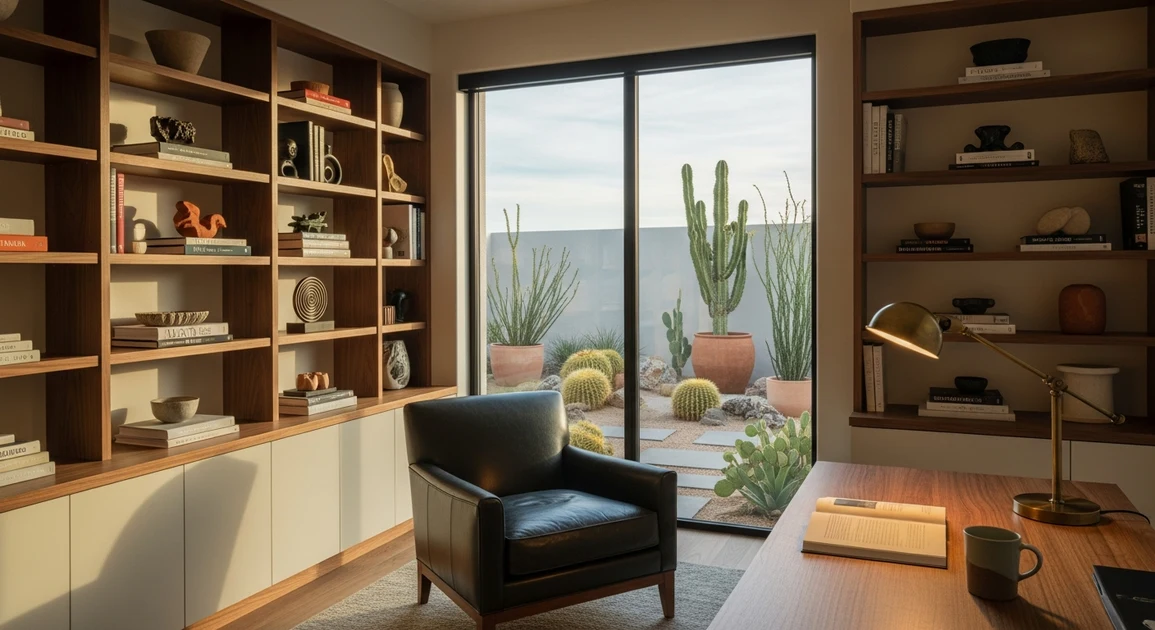
Built-in storage solves this most completely. Floor-to-ceiling bookcase walls with a combination of open shelving and closed cabinetry below. The typical office library treatment can provide substantial storage while creating the architectural character that makes an office feel serious and composed. In Scottsdale homes with 10-foot ceilings, a built-in library wall is often one of the most impactful design elements in the office, full stop.
Budget for a custom built-in library wall in a 12x14 foot home office: $15,000 – $30,000 depending on material and finish level. The same space done in quality modular furniture from a vendor like Pottery Barn or Room & Board: $4,000 – $8,000. Both can look good. The custom version fits the exact space, reads as architectural, and adds measurably to home value. The modular version is flexible if you move.
The View and the Door: Privacy Considerations
Two physical design decisions that most people don't think about until they've made them wrong: Where you face, and whether the door is behind you or in front of you.
Psychologically, people concentrate better and feel less anxious when they're not sitting with their back to an entry. A desk positioned so the door is in front of you, the "command position" used in everything from executive offices to feng shui , reduces the subtle stress of being vulnerable from behind. In practice, it just means your back is to a wall and you can see who enters. This is worth considering when planning desk placement.
The view question is real in Scottsdale, where desert landscape views from interior rooms are often dramatic and lovely. A stunning view from your desk is wonderful for your first month working from home. For some people, a view is energizing throughout the workday. For others, it's a steady distraction. Know which type you are before building a desk wall in front of a window.
Making the Office Feel Like Your Home — Not a Corporate Space
The best home offices feel like a room in your house where serious work also happens, not like a corporate office that was dropped into a residential floor plan. This means:
- -Materials and finishes that match or complement the rest of the home, not generic "office" aesthetics
- -Art that you love rather than motivational posters
- -Drapery and rugs that bring the same quality of material into the space as the living rooms
- -Furniture that's genuinely comfortable, not just functional
- -Personal objects — books, collected pieces, travel finds — that make the space feel inhabited rather than staged
The home office is increasingly a room that guests see and clients visit virtually. It's worth designing it with the same care as any other room in the house.
For how the home office fits into whole-home flow and visual consistency, read Great Room Design: How to Make One Large Space Feel Like Several.
Typical Budgets for a Scottsdale Home Office Design
- Furniture, lighting, and styling (no construction): $12,000 – $35,000
- Built-in library or desk wall: $15,000 – $30,000 (in addition to furnishings)
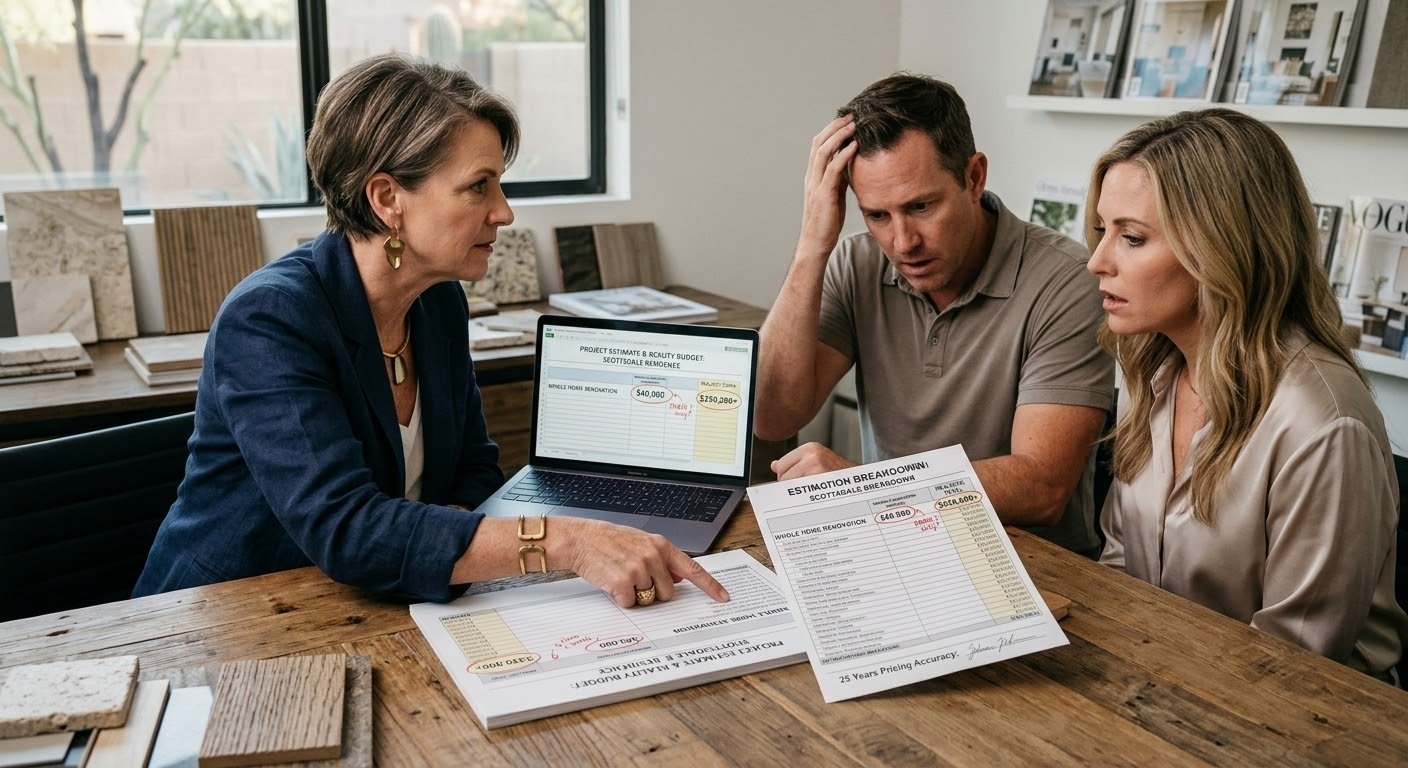
- Full room renovation with custom built-ins, acoustic treatment, and full furnishing: $45,000 – $90,000
Work Better. Enjoy the Room More. Let's Design It.
Park Avenue Design has designed home offices across Scottsdale and the surrounding communities that clients describe as the room that finally makes working from home feel sustainable. Gabrielle Roeckelein, ASID, NCIDQ offers a complimentary consultation — call (480) 961-7779 or visit parkavenuedesign.com/contact-us.
Gabrielle Roeckelein, ASID, NCIDQ — Park Avenue Design, Inc. | Scottsdale, Arizona